How to Build a $40 DIY Lightbox That Shoots Like a $400 Studio Setup
The Photo That Changed How I Think About Cheap Equipment
A few years ago, I photographed 200 products in a single day for a startup that needed to launch their Shopify store by Monday. My studio was a folding table in my apartment, a $50 DIY lightbox, and two clip-on LED panels from Amazon. Every single image went live. The client sold out of three SKUs in the first week.
That lightbox, built from a cardboard box and some diffusion material, outperformed setups I’ve seen that cost ten times more, because the physics of soft, even light doesn’t care how much you spent. It cares about surface area, diffusion, and angle. Once you understand those three things, you can build something that works anywhere.
What “Soft Light” Actually Means and Why Your Products Need It
Hard light, the kind coming from a bare bulb or direct window sun, creates sharp shadows and hot spots. On a face, that might be dramatic. On a white ceramic mug or a silver necklace clasp, it’s a disaster. You get reflections you can’t control, shadows that obscure the product’s shape, and highlights that blow out the detail you’re trying to show.
A lightbox solves this by turning a small, intense light source into a large, diffuse one. The white walls of the box act as secondary reflectors. The diffusion material stretched over the opening scatters light before it even hits your product. The result is a wraparound glow with almost no hard shadows, which is exactly what makes a product look clean and intentional rather than snapped on a cluttered desk.
The key ratio to understand: the larger your light source relative to your subject, the softer the light. A 20-inch lightbox is a large light source for a lipstick. It’s a small one for a hiking boot. Size your box to your most common product, not your biggest one.
What You Actually Need to Build It (With Real Numbers)
Here’s the material list I’ve refined over several builds:
- One large cardboard box, roughly 18x18x18 inches for most small products. Free from any grocery or liquor store.
- White foam core board, two sheets, around $5 total at a craft store. Cut to line the inside walls and floor.
- Ripstop nylon or white tissue paper for diffusion panels. Ripstop holds up better. A yard runs about $4 at a fabric store.
- White school glue or a low-temp hot glue gun to secure everything.
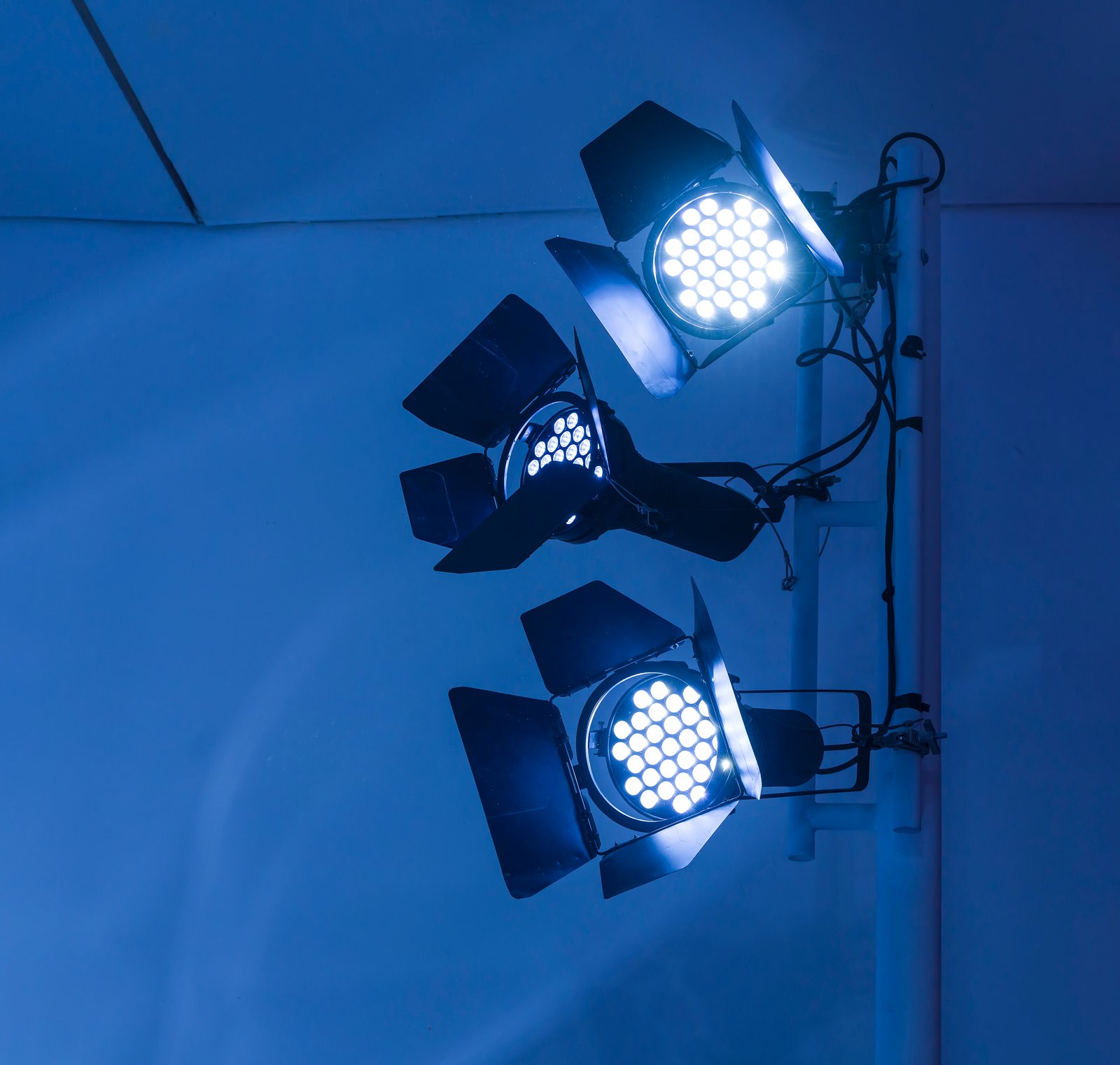
- Two daylight-balanced LED panels. I use the Neewer 660 LEDs, currently around $35 each on Amazon. Daylight balance means 5500-6500K. This matters because warm light will make your whites look yellow, and no amount of white balance correction fully recovers that.
Total: roughly $85 if you buy the LEDs new, less if you already own any kind of continuous light.
Cut three openings in the box: one large one in the front for your lens, and two smaller panels on the left and right sides. Stretch your diffusion material over the side openings and secure it with glue. Line the interior with white foam core. Set one LED panel outside each diffusion panel, angled slightly toward the back of the box. That’s your basic two-light setup.
For camera settings, start with ISO 100, f/8, and adjust your shutter speed until your exposure is clean. Shooting at f/8 gives you enough depth of field to keep the full product sharp without stopping down so far that diffraction softens the image. Shoot tethered to a laptop if you can, because judging exposure and color on a 3-inch screen will cost you time in post.
The Mistake That Kills Most DIY Lightbox Images
Dirty white balance. Most people set up their box, get excited that the shadows look soft, and never check whether their whites are actually neutral. They’re not. If you’re using mixed light sources, even slightly different color temperatures on your two LED panels, your product will have a color cast that reads as unprofessional even to people who can’t name why it bothers them.
Fix this with a grey card. Before every shoot, hold an 18% grey card in front of your product, shoot it, and use that frame to set a custom white balance in-camera or as your reference point in Lightroom. On a Canon, this is in the menu under Shoot 3, Custom WB. On a Nikon, hold the WB button and rotate the dial to PRE. Takes 30 seconds and saves you 20 minutes of color correction per batch.
Getting Your Background Actually White (Not Grey, Not Off-White)
This is where most DIY setups fall apart at the final step. You do everything right, and your white background still looks like a dingy grey in the final image. There are two reasons: underexposure and shadow.
Your camera’s metering system is designed to render everything as 18% grey. A white background will be underexposed by default. You need to overexpose your background by about 1 to 1.5 stops relative to your product. The easiest way to do this without blowing out the product is to add a third light, even a small LED strip or a second clip-on panel, aimed directly at your background sweep, which should be a piece of white foam core curving from the back wall down to the floor of your box with no visible crease.
In Lightroom, bring your whites slider up until the background reads 255, 255, 255 in the RGB histogram. Then protect your product tones by pulling the highlights slider back until the product detail holds.
The lightbox is just the beginning of the exposure, not the end of it. Your post-processing workflow is where the image becomes something you can actually sell from.
Build the box this weekend, test it with whatever small product is sitting on your kitchen counter, and you will immediately see what controlled light does to the perceived value of an object. That’s the whole point.