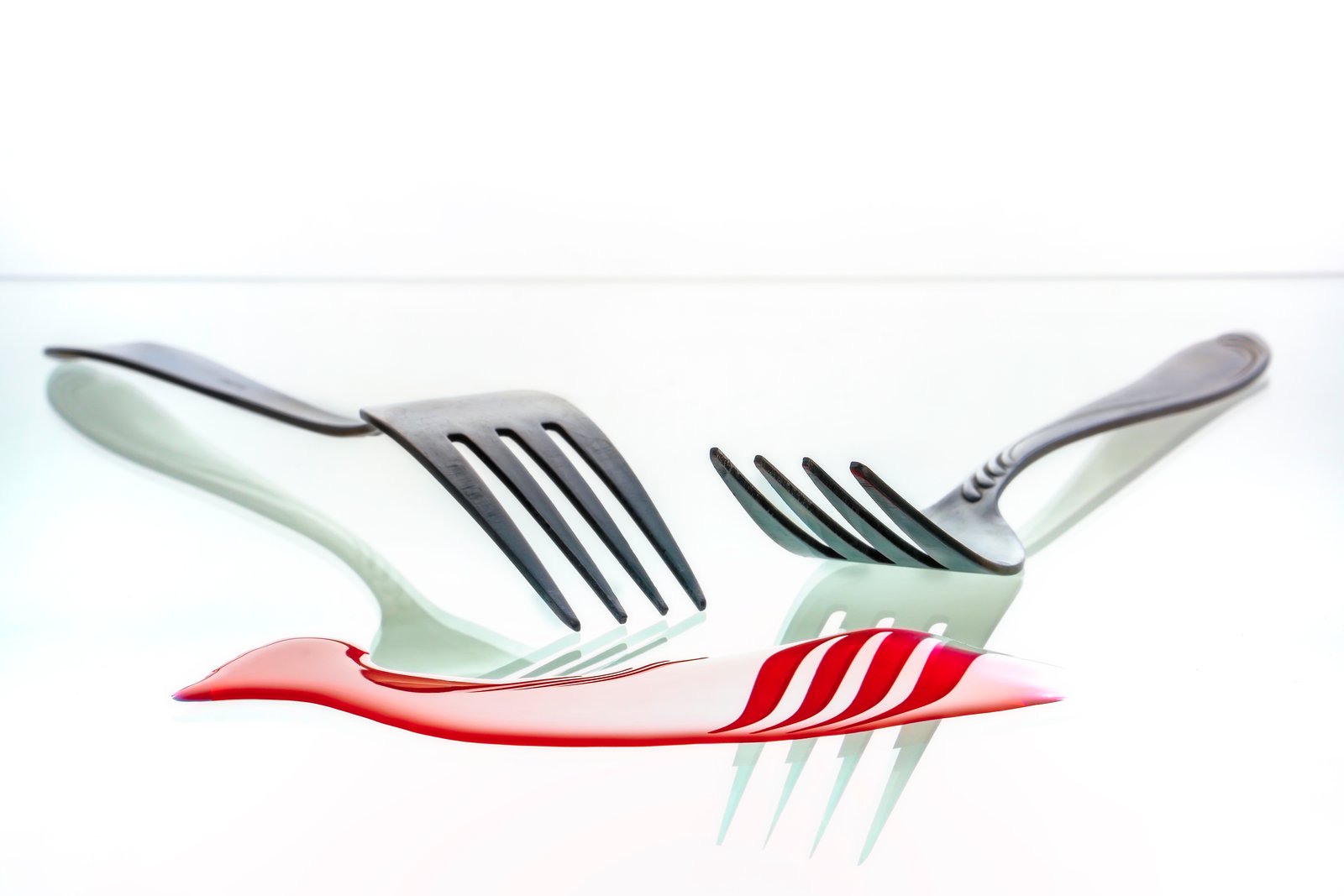
How Reflective Surfaces Can Make or Break Your Product Photos (And What to Use Instead of a Mirror)
The Reflection Problem Nobody Talks About in Product Photography
I was shooting a skincare line for a small brand out of Culver City a few years ago. The client had beautiful amber glass bottles, the kind that photograph themselves on a good day. Except every shot I delivered had a ghostly white blob floating across the front of each bottle. Soft, diffused, unavoidable. That blob was me. More specifically, it was my softbox, reflected back through the glass.
Reflective products don’t just photograph differently than matte ones. They photograph everything around them. The bottle, the compact, the watch face, the patent leather shoe. These surfaces are basically wide-angle mirrors, and if you’re not thinking about what’s in that mirror before you press the shutter, your photos will carry that chaos straight to the product listing.
This is one of the most common reasons product photos look cheap even when the product itself isn’t. It’s not the camera. It’s not the lighting power. It’s what’s happening on the surface of the object and what that surface is choosing to show.
What Reflective Surfaces Are Actually Doing to Your Light
When light hits a matte surface, it scatters in many directions. That’s called diffuse reflection, and it’s forgiving. When light hits a reflective surface, the angle of incidence equals the angle of reflection. Every time. That means a light source positioned at 45 degrees to your product will bounce back at exactly 45 degrees on the other side. Move the light two inches and the reflection moves. This isn’t artistic intuition. It’s geometry.
This matters because the fix isn’t “add more light.” It’s about controlling the position, size, and quality of the light source so that its reflection either lands outside the camera’s field of view or becomes a deliberate, shaped highlight that reads as premium rather than accidental.
Large, soft light sources reflect as smooth gradients. Small, hard light sources reflect as sharp, distinct hot spots. This is why high-end perfume campaigns use long strip softboxes: the reflection across the bottle is a clean vertical gradient that implies luxury. Your bare LED panel at 2 o’clock is reflecting as a rectangle of harsh white, which implies an Amazon seller’s garage.
The Surfaces Themselves: What to Spend Money On and What to Skip
I keep several surface options at my setup, which in my apartment is basically my kitchen counter next to a window. Here’s what I actually reach for and why.
Black acrylic sheets (roughly $15 to $25 for a 12x24 inch sheet from TAP Plastics or any local plastics supplier) create the richest reflections for dark or jewel-toned products. They produce that mirror-floor look you see in cologne ads without requiring a studio. The downside: they scratch if you look at them wrong. Keep them covered and wipe with a microfiber cloth only.
White foam core reflects light back into shadow areas and creates a soft, milky surface reflection that flatters lighter products like ceramics or pastel packaging. A two-pack from any craft store is under $5. Not glamorous, but I use it almost every single shoot.
Brushed aluminum and frosted acrylic split the difference. They reflect, but imperfectly, which diffuses hot spots and creates texture under the product. These read as “editorial” when shot from a low angle and work especially well for tools, tech accessories, and anything with clean, industrial lines.
What I’d skip: actual mirrors. The reflection is too perfect and too literal. You see the product, and you see the exact ceiling, the exact light stand, the exact moment someone forgot to tuck a cable out of frame. Controlling a real mirror requires more setup time than the result is usually worth for e-commerce work.
Setting Up a Reflective Surface Shot Without Losing Your Mind
For a glass or lacquered product on black acrylic, I start with a single large light source, usually a 24x36 inch softbox, positioned high and slightly behind the product at about 10 to 11 o’clock. This puts the reflection of the softbox up toward the top of the product, creating a natural highlight that draws the eye upward. I then use a small piece of white foam core on the opposite side, maybe 12 inches from the product, to bounce just enough light into the shadow side to keep detail there.
Camera settings for this: ISO 100, f/11 for depth of field across the full product, shutter speed adjusted to ambient light conditions (usually 1/125 to 1/200 in a controlled indoor space). Shoot tethered if you can. Even a $30 USB-C cable into Lightroom’s tethering function lets you see the reflection accurately instead of squinting at a camera LCD.
The reflection in the surface below the product should be sharp and intentional. If it looks blurry or incomplete, lower the camera angle or move the product closer to the surface. That reflection is part of the composition, not an accident to crop out.
When My Client’s Jewelry Went From Snapshots to Something That Actually Sold
My mom used to sell handmade earrings online. The photos were taken on a bathroom counter with an iPhone, no offense to the iPhone. The pieces were genuinely beautiful: hammered gold, intricate wire work. But in the photos, the metal looked flat and gray, and the shapes were hard to read because there was no contrast between the jewelry and the cluttered background behind it.
I set her up on a black acrylic sheet with a single LED panel bounced off a white card at about 45 degrees. Shot from slightly above, maybe 20 degrees off horizontal. The metal caught the light, the reflection anchored the piece in the frame, and the negative space around it finally gave the jewelry room to breathe. Her sales more than tripled within two months. Same products. Same price points. Just surfaces and light doing what they’re supposed to do.
The One Thing Worth Remembering About Reflective Surfaces
Reflective surfaces don’t hide bad lighting. They amplify whatever light you give them, good or bad. Get the light source right first, and the surface will do the rest of the work for you.