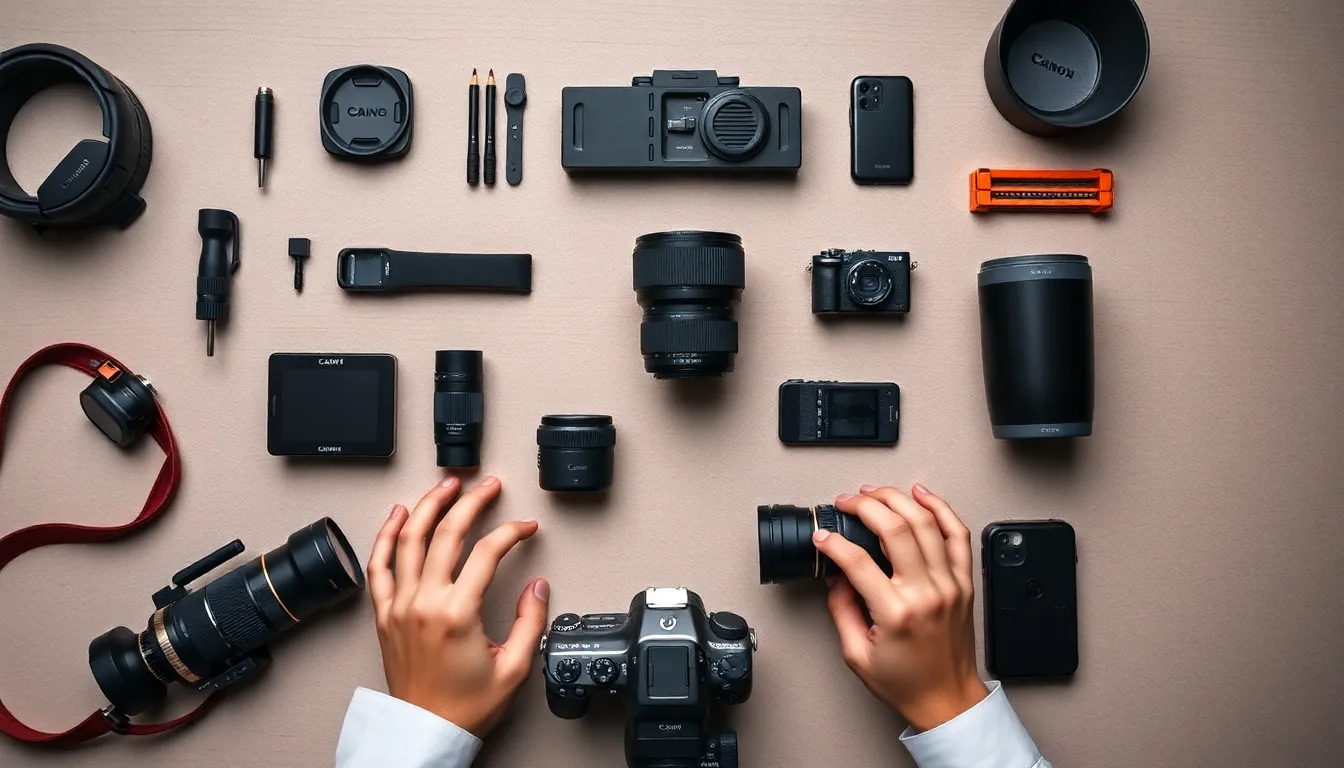
Mastering Flat Lay Product Photography: Composition, Lighting, and Camera Settings
I’ve shot thousands of flat lays—everything from luxury skincare to artisan coffee. What separates images that sell from those that don’t isn’t magic. It’s methodology. Let me walk you through exactly how I approach every flat lay assignment.
Why Flat Lay Works (And When It Doesn’t)
Flat lay succeeds because it removes distractions. No model. No environment. Just your product and intentional styling. For e-commerce, this matters enormously—85% of shoppers cite product images as their primary decision factor.
But flat lay isn’t right for everything. It works beautifully for accessories, stationery, cosmetics, and food. It struggles with items that need scale (furniture) or functional context (kitchen appliances). Know your product first.
Composition: The Rule of Thirds Isn’t Enough
I rarely center products. Instead, I use the rule of thirds as a starting point, then break it strategically.
Position your hero product at a two-thirds intersection. This creates visual tension that keeps eyes moving. Then layer secondary items—props, lifestyle elements, complementary products—along implied diagonal lines. Think of it as a visual path: where should the eye travel?
For multiple products, I follow the “odd number rule.” Three items feel balanced. Two items feel incomplete. Four feels scattered. Odd numbers create natural harmony.
Lighting: My Go-To Setup
Here’s my standard flat lay lighting rig:
Main light: A 2-foot x 3-foot softbox at 45 degrees, positioned above and to the left of the product. This is your key light—it defines dimension.
Fill light: A 1x2 foot softbox on the right side, roughly 1 to 1.5 stops darker than your main light. This prevents deep shadows that feel too dramatic for e-commerce.
Backlight (optional): A small spot light at 45 degrees behind the scene adds separation and depth. Essential for jewelry and translucent products.
For natural light shooters: position your flat lay perpendicular to your window, not parallel. Light hitting from the side creates more texture than flat, frontal window light.
Camera Settings for Sharp, Consistent Results
I shoot flat lay at:
- Aperture: f/5.6 to f/8 — This gives sharp focus across the entire scene without diffraction softness
- Shutter speed: 1/125 to 1/250 — Fast enough to avoid motion blur, but slow enough that I control light with aperture, not ISO
- ISO: 100-400 — Keep it as low as your lighting allows. Noise destroys fine detail in textures
- Focal length: 50-85mm — Longer lenses compress perspective naturally and minimize distortion from overhead angles
White balance is non-negotiable. I custom white-balance on the background material itself, not on gray cards. This ensures colors match across your catalog.
Surface and Styling Decisions
Your background isn’t wallpaper—it’s part of the composition.
Textured surfaces (concrete, wood, linen) add visual interest but steal focus. Reserve them for lifestyle shots. For e-commerce product pages, use neutral, flat backgrounds—white, pale gray, or soft pastels. These maximize product readability.
Keep props intentional. A single aesthetic element (a dried flower, a vintage key, a folded fabric swatch) is styling. Random objects are clutter. Every prop should either complement the product’s story or provide scale context.
The Technical Detail That Changes Everything
Shoot tethered when possible. I connect my camera to a laptop and view images at 100% zoom in real-time. This catches focus misses, dust particles on surfaces, and composition imbalances before you’ve shot 200 images.
Post-Processing: Minimal is Better
Flat lay post-processing should be invisible. Adjust exposure and white balance. Maybe a subtle clarity bump to emphasize texture. But don’t add artificial dimension or stylization—that erodes trust.
Your lighting should do 90% of the heavy lifting. If you’re spending hours in Lightroom fixing a flat lay, your setup needs adjustment, not rescue.
Flat lay is systematic. Control your variables—light, composition, camera settings, styling—and your results become predictable and scalable. That’s when you’re not just taking pictures. You’re building a visual brand.
Comments
Leave a Comment