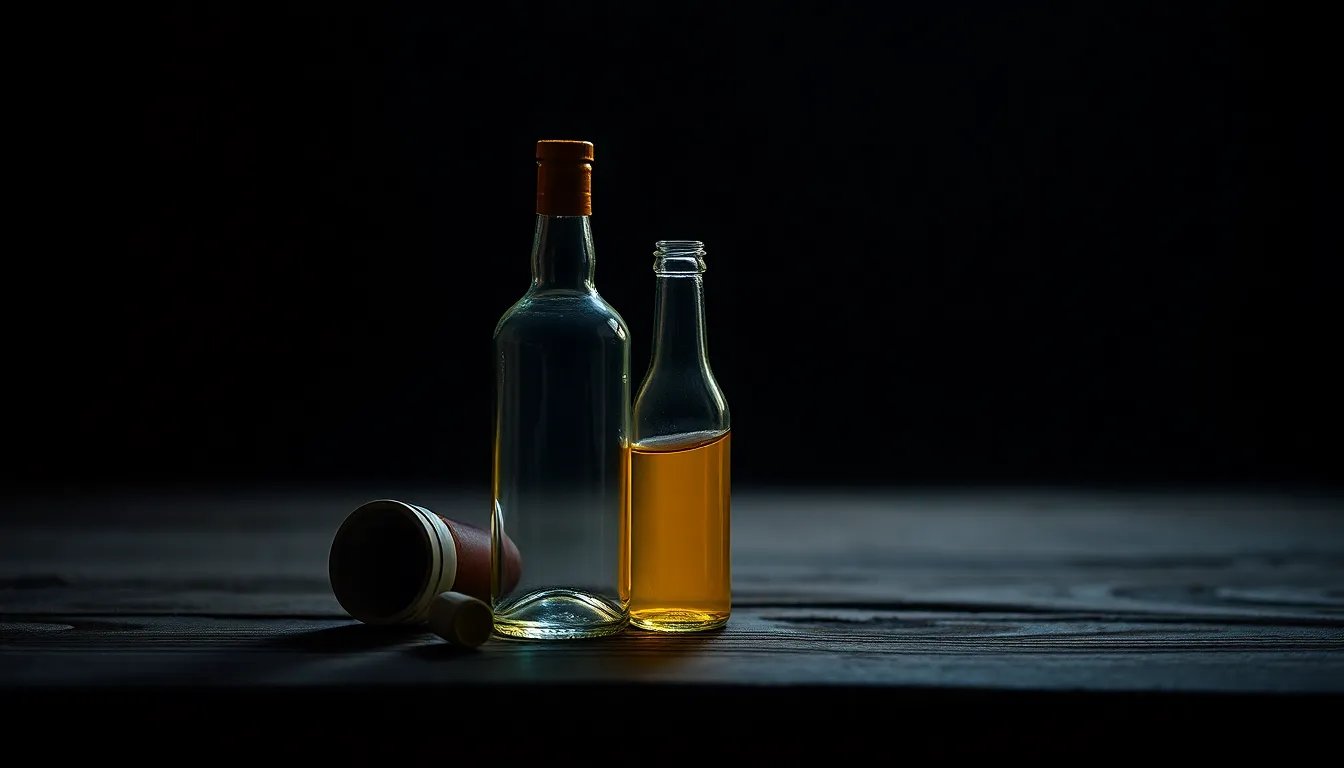
Bottle Photography Mastery: Lighting and Composition for E-Commerce
Bottles are deceptively difficult to photograph well. They’re reflective, transparent or translucent, and their value often depends on what’s inside them—yet we’re tasked with making the exterior sing. I’ve shot thousands of bottles across spirits, skincare, supplements, and beverages, and I’ve learned that success comes down to three things: light direction, background control, and understanding how glass behaves.
The Physics of Bottle Lighting
Glass doesn’t generate light; it reveals it. Your job is to shape light so it reveals the bottle’s shape, color, and texture without creating blown-out highlights or muddy shadows.
I use backlighting as my foundation for 90% of bottle work. Position a key light source behind and slightly above the bottle, angled at 30–45 degrees. This creates rim lighting that separates the bottle from the background and shows off the glass quality. For a 750ml wine bottle, I typically place my backlight 4–6 feet away at a 45-degree angle.
Pair this with a front fill light at 2–3 stops below your key. This fill prevents the front of the bottle from going completely dark. I use a white reflector or diffusion panel about 18 inches in front, slightly off-center. The ratio matters: if your backlight reads f/11, your fill should read approximately f/5.6–f/8.
Camera Settings for Clarity
Bottles demand technical precision. Here’s my standard starting point:
- Aperture: f/11–f/16 — You need depth of field to keep the entire bottle sharp, especially the label and neck. Anything wider risks a soft label edge.
- Shutter speed: 1/125–1/250s — Fast enough to freeze any ambient light contamination, slow enough to sync with studio flash.
- ISO: 100 — Low and clean. There’s no reason for noise in controlled studio lighting.
- White balance: Custom — Shoot a gray card under your exact lighting setup. Bottles with warm liquids (whiskey, wine) need accurate color for e-commerce trust.
I shoot in RAW exclusively. Glass highlights are forgiving in RAW but clipped in JPEG—you’ll lose detail you can’t recover.
Composition Techniques That Work
The three-quarter turn is your default. Position the bottle so the label faces the camera at about 30 degrees, not dead-on. This reveals the bottle’s volume and shape while showing the label clearly. Rotate the bottle so any seams or imperfections face away.
Height and horizon line matter. I place the bottle’s widest point at the upper third of the frame using the rule of thirds. This creates visual balance and room for negative space, which translates to better cropping flexibility for e-commerce templates.
The base is critical. Most photographers ignore it. In my setup, I use a seamless white or light gray surface with a slight curve to eliminate a hard horizon line. The base should be clean and shadow-free—use diffusion above to soften any harsh shadows directly beneath the bottle.
Background and Surface Control
Don’t default to pure white. A very light gray (about 95% brightness) photographs cleaner and gives the bottle visual separation. Pure white can blow out and create halos around the bottle edges.
For liquids inside the bottle, backlighting reveals color beautifully. A deep amber bourbon, clear vodka, or golden wine all show their true character with light passing through them. For opaque bottles or if you want to minimize label texture, switch to a side-light setup instead.
The Detail Check
Before you finalize, inspect these specifics:
- Dust and fingerprints — Visible under studio light. Clean bottles with microfiber cloths pre-shoot.
- Label placement — Perfectly straight, no wrinkles or creases.
- Reflections — Look for unwanted ceiling reflections in the bottle. Adjust your light angle if needed.
- Highlight blow-out — Check your histogram. Bottle highlights should sit at 95% brightness, not 100%.
Bottle photography rewards methodical setup and lighting understanding. Master these fundamentals, and you’ll produce images that don’t just show products—they sell them.
Comments
Leave a Comment